

The LinkedIn About section is one of the most important parts of your profile. It’s a part where you make a memorable impression on recruiters while improving your visibility in search results through relevant keywords. Generally, it’s similar to a resume summary, but it should sound more personal and natural.
In this guide, we will show you how to write an About section that stands out and invites meaningful connections. Here, you will also find sample sections and tips for keeping your LinkedIn aligned with your resume.
Key Takeaways
LinkedIn’s About section (sometimes also called Bio or Summary) is where you share your professional narrative within 2,600 characters.
It should highlight your value proposition through key achievements and relevant skills, helping recruiters, clients, and collaborators quickly understand what you bring to the table.
The About section also matters because LinkedIn’s algorithm scans it for keywords, which can improve how often your profile appears in search results.
A strong About section starts with a clear hook, communicates your competencies in a focused way, shows a bit of your personality, and ends with a direct call to action.
Make recruiters chase you on Linked
- 10 game-changing fixes
- 25+ expert tips that give you an extra edge
- Personalized to your target role
- Based on insights from 40+ recruiters
- Optimized for LinkedIn search algorithms
What Is the LinkedIn About Section?
The LinkedIn About section is the portion of your profile that appears beneath your name and headline. It is sometimes referred to as your LinkedIn Bio or Summary. Here, you have up to 2,600 characters to introduce who you are professionally, what you do, and why it matters.
What you write in this space is important because it is often the first place people look. Recruiters and hiring managers use it to form an initial impression of who you are, assess whether your experience is relevant, and decide if they want to explore your profile further.
It is also scanned by LinkedIn’s search algorithm for keywords related to roles, skills, tools, and industries, which directly influences how easily your profile can be found by others.
LinkedIn About Section vs. Resume Summary
The LinkedIn About section and a resume summary serve similar purposes, but they aren’t interchangeable. They are read in different contexts and should be written differently to match how people use them.
The table below outlines the key differences between LinkedIn About section vs. resume summary:
Feature | LinkedIn About Section | Resume Summary |
|---|---|---|
Primary Purpose | Build your professional story and personal brand | Quickly summarize your qualifications |
Length | Longer, flexible format | Short (2–5 lines) |
Writing Style | Conversational and first-person | Formal and usually third-person |
Tone | Personal, engaging, and narrative-driven | Concise, factual, and achievement-focused |
Content Focus | Career journey, values, expertise, and goals | Job title, key skills, and top achievements |
However, since some details overlap, you might wonder whether it is alright to reuse content from one for the other. The general guideline is that you can carry over key themes and messaging, but you shouldn’t copy content word for word.
To keep both aligned without repetition, define a value proposition that you will use for both. You can determine it by reviewing the results you have delivered and the praise you have received from managers, clients, or colleagues.
Keeping your resume and LinkedIn About section cohesive helps you make a stronger and more credible first impression, especially since recruiters increasingly review social networking websites (SNWs) and professional online profiles while hiring.
How Important Is the About Section on LinkedIn?
The About section is one of the most important parts of your LinkedIn profile for two reasons:
It lets recruiters quickly assess whether you align with what they are looking for. Recruiters typically scan profiles in seconds, using the About section to decide whether there is enough relevance to keep reading. If that initial fit is not clear, your profile will likely be skipped.
It lets the algorithm surface your profile in search results based on LinkedIn keyword optimization. This increases your chances of being discovered by hiring managers, clients, and collaborators. It also supports networking and credibility building, which can lead to referrals, recommendations, and access to the hidden job market, as well.
While you might be tempted to skip this section because your education, experience, and skills are already detailed below, completing it can increase your profile views by up to 3.9 times.
How to Write a Strong LinkedIn About Section
Follow the four steps below to write a strong LinkedIn About Me section:
#1. Start With a Compelling Hook
If you use most or all of the 2,600 characters allowed in your About section, only the first three to four lines will appear; the rest remains hidden unless the reader clicks ‘see more.’ For this reason, your opening sentences need to work as a hook.
They should grab the reader’s attention and give them a reason to read on. Avoid restating what’s already in your headline (usually your name and job title) and focus instead on clarity, specificity, and alignment with the roles or opportunities you are targeting.
#2. Highlight Your Skills and Experience
After the hook draws the reader in, the next part of your About section should clearly explain what you do and how good you are at it. This is especially important when searching for a job, as it helps you establish credibility and convinces the reader that you are the right fit for the role they are looking to fill.
You shouldn't list everything you have ever done; instead, focus on your most relevant skills and experiences. At the same time, you should be using keywords strategically. In this section, it is best to use value-based terms and phrases; for instance, “reduced drop rates,” “lowered customer churn,” and “increased checkout completion” as a UX designer.
One way to go about this is by referencing the results of your most recent work; here, a LinkedIn profile tip to keep in mind is to use numbers whenever possible. Research in persuasive communication shows that quantified information is often perceived as more credible and convincing.
#3. Show Personality and Career Direction
While writing, it is important to let your personality come through; this helps the reader grasp what kind of professional you are beyond your listed skills and qualifications.
A touch of personality makes your profile more memorable and easier to connect with, especially in a platform built on relationships. In addition, your About section should signal where you are headed in your career. Making your direction clear helps recruiters, hiring managers, clients, and collaborators understand how you fit into their needs.
#4. Add a Clear Call to Action
Finally, end your About section with a clear call to action that tells the reader what to do next. After learning who you are and what you offer, recruiters and connections shouldn’t have to guess how to engage with you.
Consider inviting them to connect, message you about opportunities, or view your portfolio. You should keep it specific and low-pressure, and align it with your current career goals so the right people know how and why to reach out.
LinkedIn About Section Examples
Here are a few sample About sections for different career stages and needs:
#1. Job Seekers
The About section on LinkedIn for job seekers should quickly highlight your skills, strengths, and the type of opportunity you are looking for. Here is an example:
Good Example
Most of my work lives in the space between a scroll and a click. I’ve written and managed content for SaaS brands, including a campaign that brought in 1,200 new email subscribers in six weeks. I’m now looking for a marketing role where I can focus on growth-focused storytelling and digital strategy.
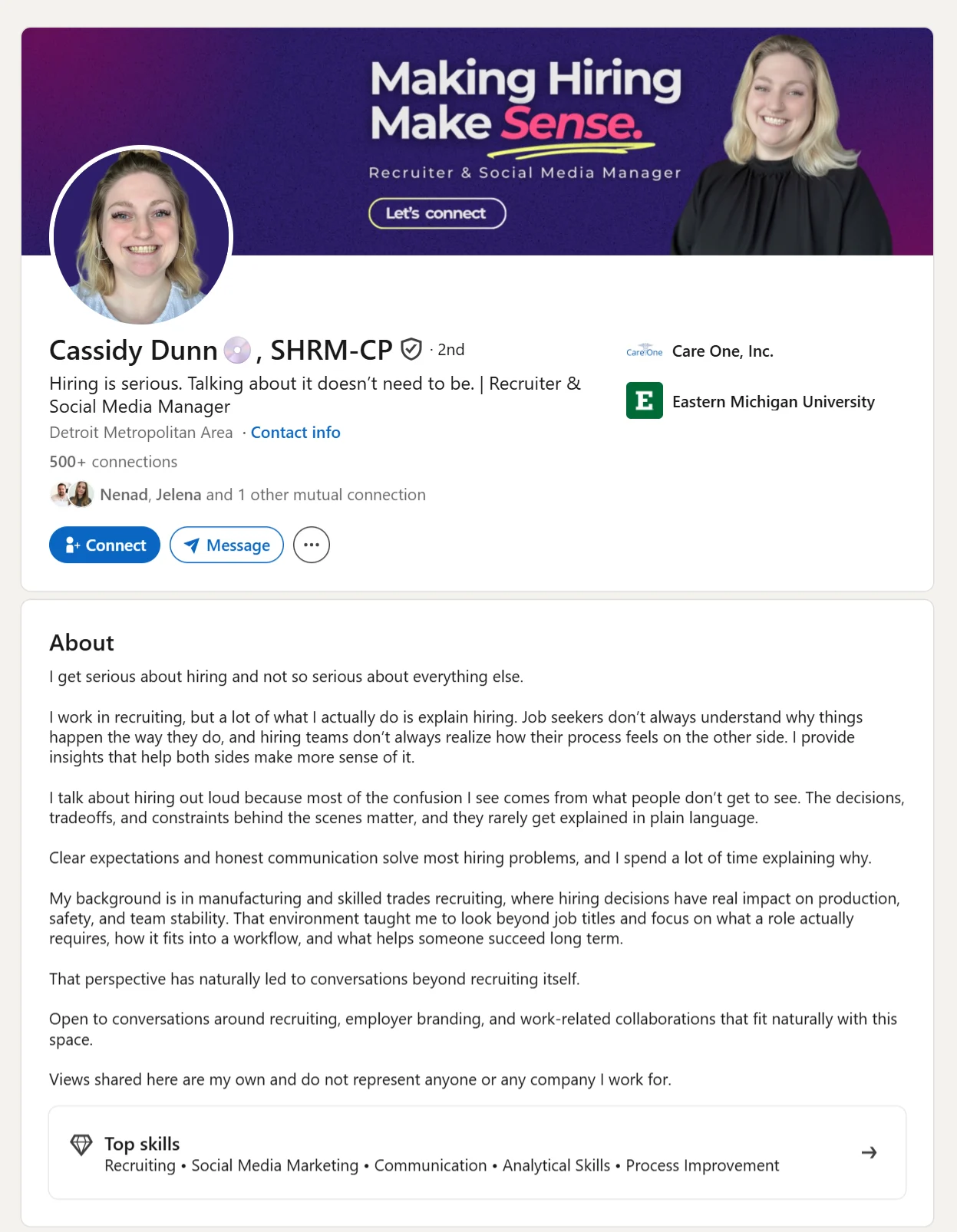
Take a look at this other sample for inspiration if you are searching for a job on LinkedIn:
#2. Career Changers
To make the most of LinkedIn for career changers, your About section should connect your past experience to the direction you are moving toward; for example:
Good Example
I spent six years in the classroom teaching, but what I loved most was designing the learning experience itself. Over the past year, I have transitioned into instructional design, building digital training modules in Adobe Captivate. Now, I’m pursuing full-time roles in L&D.
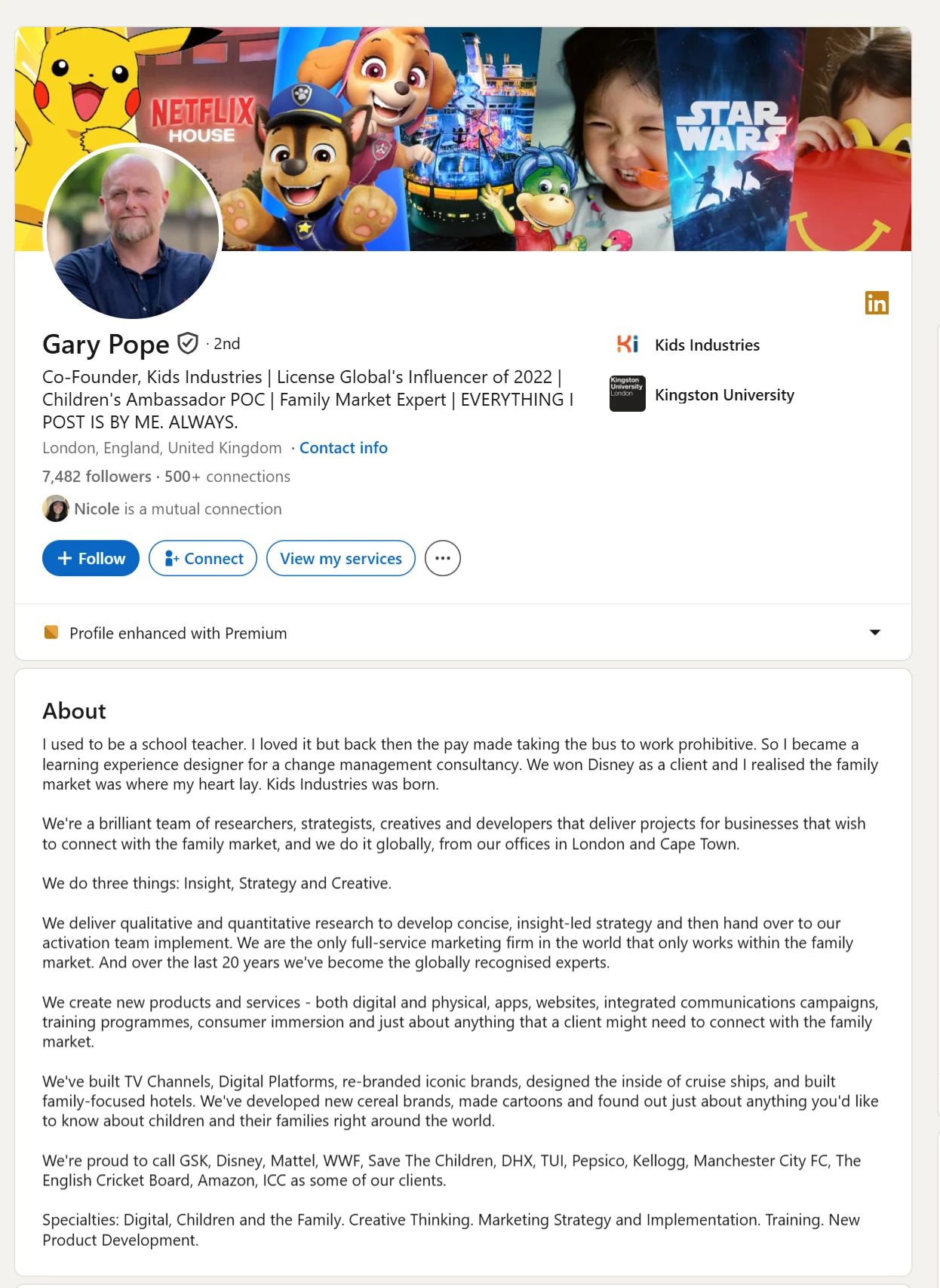
Below is a more extensive example written by a person who used to be a teacher:
#3. Students
With an About section on LinkedIn for students, it is best to include projects, internships, or measurable academic work that highlight potential and demonstrate career aspirations, such as:
Good Example
Marketing, to me, is part storytelling and part decision science. As an MBA marketing student at UMass, I’ve been building experience through 5 case competitions and 5 applied projects, including a go-to-market plan for a retail brand. I’m currently looking for roles that combine analytics, positioning, and customer-focused strategy.
I’m studying Computer Science at Vanderbilt, with a focus on software development. Recently, I built a budgeting app as a project that tracked spending across 500+ test entries. My goal is to secure a summer internship where I can work on real-world applications and learn from an experienced engineering team.
#4. Executives
For executives, the About section should communicate leadership scope, strategic impact, and the type of organizations or challenges you focus on.
Good Example
Over the past decade, I have overseen 30+ multi-million-dollar business units and guided expansions into three new markets. My work centers on building strong leadership structures and aligning strategy with measurable performance.
Here is a different example with a more storytelling approach:
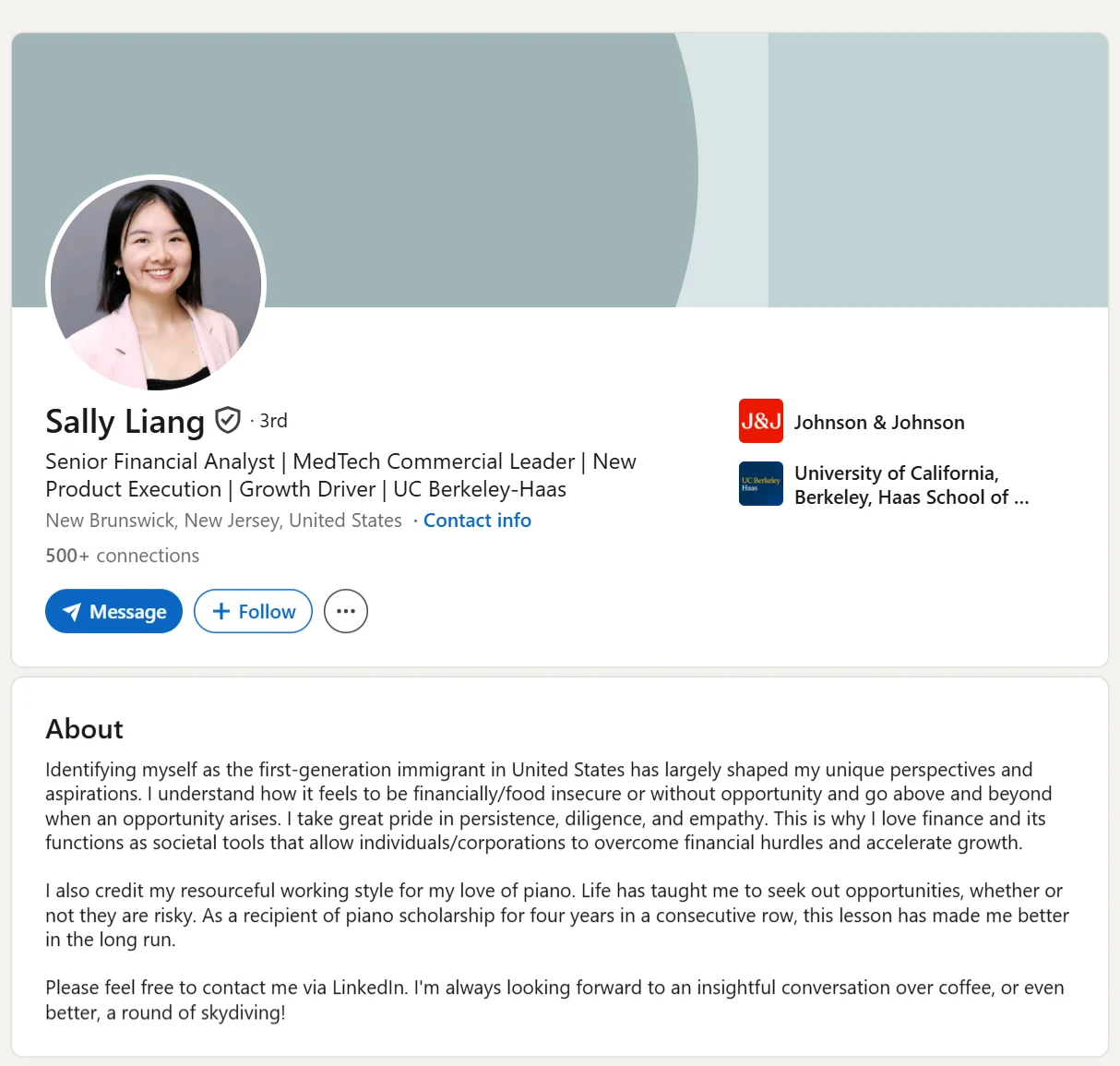
LinkedIn Summary tip: Don’t just focus on broad titles; your specific outcomes and decision-making experience will matter more.
#5. Freelancers
Freelance About sections work best when they quickly explain what you do, who you help, and what kind of results clients can expect. Core services and specific outcomes make it easier for the right people to reach out; for example:
Good Example
Good design is often the difference between being noticed and being ignored. I create brand identity kits for small businesses that want a cleaner, more consistent look. Recently, I built a full package for a local restaurant that helped increase online orders by 30% in two months. Want my help with yours? Let’s connect!
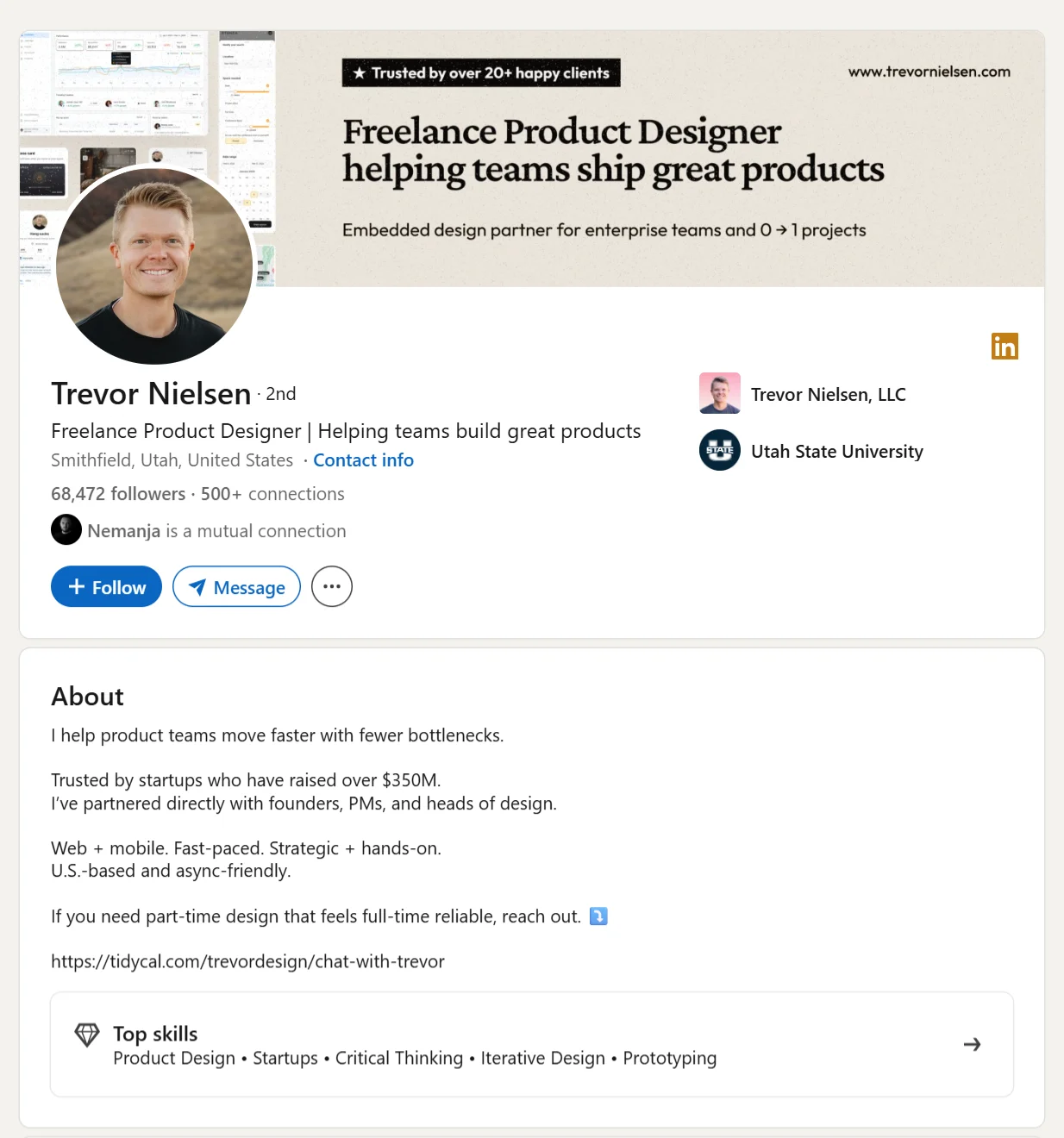
And check out this real design About section sample created by an experienced product designer:
4 Best Practices for LinkedIn About Section
Below are four best practices for writing LinkedIn About section:
Think about your call to action first. While it comes at the end of your About section, it captures the main goal and should guide everything else you write in this space. Do you want recruiters to reach out? Potential clients to book a call? Your answer to this should shape every sentence that you include.
Use emojis and special characters sparingly. They can make your section easier to scan, reinforce your personal brand, and help your profile feel more approachable. However, too many can be distracting or unprofessional; it is best to just stick to one or two.
Avoid walls of text. Many LinkedIn readers skim rather than read word for word, so long, dense paragraphs are often skipped. You should break your About section into short 1-3 sentence paragraphs, and use line breaks to keep everything easy to scan.
Avoid generic buzzwords. Words like “hardworking,” “results-driven,” or “team player” are popular, but they don’t tell readers much. With over 243 million LinkedIn members in the U.S., it is important to stand out; steering clear of buzzwords can keep you from sounding like everyone else.
Learn How to Optimize Your LinkedIn Profile With Resume.co
Start nowIs LinkedIn Profile Enough to Get Hired?
In short, no. While a well-established LinkedIn presence helps, you should have a well-structured resume that clearly communicates your skills and qualifications.
Our AI-powered resume builder provides templates and examples to help you organize your information clearly and efficiently. You don't have to start from scratch, and you can customize design details to reflect your personal brand, keeping it cohesive with your LinkedIn!
Want to upgrade your resume?
Design a new one in minutes with our resume builder.Closing Thoughts
With a well-written LinkedIn About section presenting your professional story, you can stand out and open doors to opportunities.
Recruiters and hiring managers may reach out directly, or you may build connections with professionals who lead to referrals and recommendations over time. So, take the time to craft a focused About section and ensure your profile supports those possibilities at first glance!
LinkedIn About Section FAQs
#1. How long should a LinkedIn About section be?
Your LinkedIn About section should be under 2,600 characters, which is the platform’s limit. A good length is usually a few short paragraphs that highlight your strengths and goals clearly, without overwhelming readers who skim profiles quickly.
#2. Can I copy my resume summary to LinkedIn?
You shouldn’t copy your resume summary to LinkedIn word-for-word. Instead, carry over the themes and messaging and rewrite them in a more personal, conversational tone. The goal is to make your About section sound approachable while still staying professional.
#3. What keywords should I use in my About section?
You should use value-based and skill-specific keywords in your About section. This helps recruiters understand what you do and improves your profile’s search visibility. Also, make sure that the terms and phrases you use are relevant to the opportunities you are targeting.
#4. How often should I update the About section on LinkedIn?
You should update the About section on LinkedIn whenever your role, career goals, key skills, or top achievements change. Reviewing it every few months also helps ensure your profile stays relevant, accurate, and aligned with your current direction.
Make recruiters chase you on Linked
- 10 game-changing fixes
- 25+ expert tips that give you an extra edge
- Personalized to your target role
- Based on insights from 40+ recruiters
- Optimized for LinkedIn search algorithms