
To put LinkedIn on a resume, you can copy and paste your profile URL to the document, hyperlink it, or even add the LinkedIn logo or a QR code to make it look more professional. Including it wrong, e.g., with a messy default URL, a broken link, or an unoptimized profile behind it, can hurt more than help.
If you're not really sure about adding a LinkedIn URL to your resume, you’ve come to the right place. In this guide, we examine exactly how to put LinkedIn on a resume the right way: where to place it, how to format it, and what to fix on your profile before you share it.
Key Takeaways
Adding your LinkedIn profile to a resume lets you present your experience and expertise in more detail.
Before you learn how to put LinkedIn on a resume, make sure to optimize your profile and include all the relevant work-related information, as well as references and endorsements from reputable sources.
Some of the best tips on how to add a LinkedIn profile to your resume include hyperlinking and adding a LinkedIn logo or QR code to your document.
Avoid long URLs, including broken links, adding your profile if it’s not optimized, and including too many QR codes.
Should You Include a LinkedIn Profile on Your Resume?
The short answer to the “Should you include a LinkedIn profile on your resume” question is—yes, you should.
As for a more elaborate answer, attaching your LinkedIn profile to your application lets you share your career story from another angle, adding an additional layer to your professional self-presentation. This can possibly cement your candidacy in the recruiter’s mind—the more time they spend on your application, the higher your chances of landing the job.
Additionally (and even more importantly), according to LinkedIn statistics, 72% of recruiters search for candidates on this platform. Therefore, whatever the job you’re applying for, knowing how to put LinkedIn on a resume increases the chances of recruiters being interested in further inspecting your job application.
4 Things to Do Before Including a LinkedIn Profile on Your Resume
Things to do before including a LinkedIn profile on your resume include optimizing your profile, getting references and endorsements, adding examples of your work, and customizing and cleaning your URL.
Here are a few pro tips to help you write a good LinkedIn profile:
#1. Optimize Your LinkedIn Profile
Optimizing your LinkedIn profile encompasses several phases, from listing your work experience to choosing the right profile and cover picture, so let’s go through them one by one:
List your skills. This step is pretty straightforward—all you need to do is scroll through the provided list of soft skills and hard skills and check all that apply to you. However, a list of skills that’s too extensive can seem unwieldy, so choose only the ones relevant to the job niche you’re aiming for.
Add your work experience. The most essential section on a resume is work experience, and the same goes for LinkedIn. A list of impressive skills is hollow if you have nothing to corroborate them.
Include LinkedIn Learning on your resume and profile. If you've completed any courses, list them under the Licenses & Certifications section. This signals continuous learning to recruiters and backs up the skills you've listed.
Get creative with your headline. By default, your headline on LinkedIn is your most recent role. However, instead of leaving it at that, you can enhance that section by including industry-related keywords and an impact statement.
Make a story out of your summary. Since many LinkedIn users’ profiles have no summary, making an effort to turn yours into a story will immediately set you apart from the crowd (and competition). You can do that by stating your goals and passions, as well as your top core competencies.
Use relevant keywords. Since your LinkedIn profile is your personal piece of content marketing, use the right keywords and buzzwords to enhance its visibility.
Choose the right profile and cover photo. Your profile photo represents you in the business networking world, so choose a recent one, make sure your face takes up about 60% of the frame, and wear professional clothes. As for the cover photo, go for something that sets the tone of your profile and makes it memorable.
#2. Get References and Endorsements
You should get references and endorsements on LinkedIn, as they’ll increase your credibility by substantiating your skills and expertise. Everyone can blow their own horn, but your achievements are only impressive if others sing them.
The best way to go about it is to go through your network and leave several genuine endorsements yourself, as people tend to return the favor. Another approach is to politely ask some of your connections for endorsements and send out personalized requests for references to a few professionals in your field.
#3. Add Examples of Your Work
Adding examples of your work by providing a portfolio or links to your previous projects on LinkedIn makes your profile more readable and interesting. More importantly, it lets you showcase your work visually, giving potential employers a clearer idea of what you do and how.
#4. Customize and Clean Your LinkedIn URL
Customizing and cleaning your LinkedIn URL makes your profile easier to identify, which can lead to more relevant connections. Let’s see how to do it in a few simple steps, both on desktop and mobile.
To customize your LinkedIn URL on a desktop computer, follow these steps:
Select the Me icon at the top of your homepage, and click on View Profile.
On your profile page, select the Edit icon next to the Public profile and URL option.
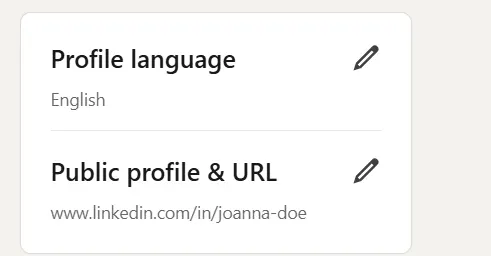
Select Edit your custom URL and click the pen icon to confirm the action.
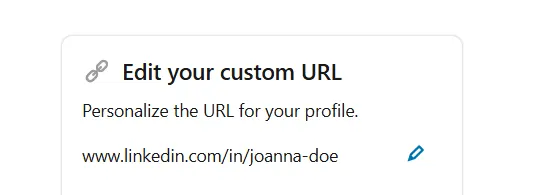
Change your URL in the provided text box.
Save the changes.
However, before sharing your URL, confirm that your profile is set to Public because a private profile linked on a resume leads recruiters to a dead end. Once you’ve done all this, it’s time to learn how to put LinkedIn on a resume and increase your chances of recruiters getting in touch with you.
Where to Add a LinkedIn Profile on a Resume?
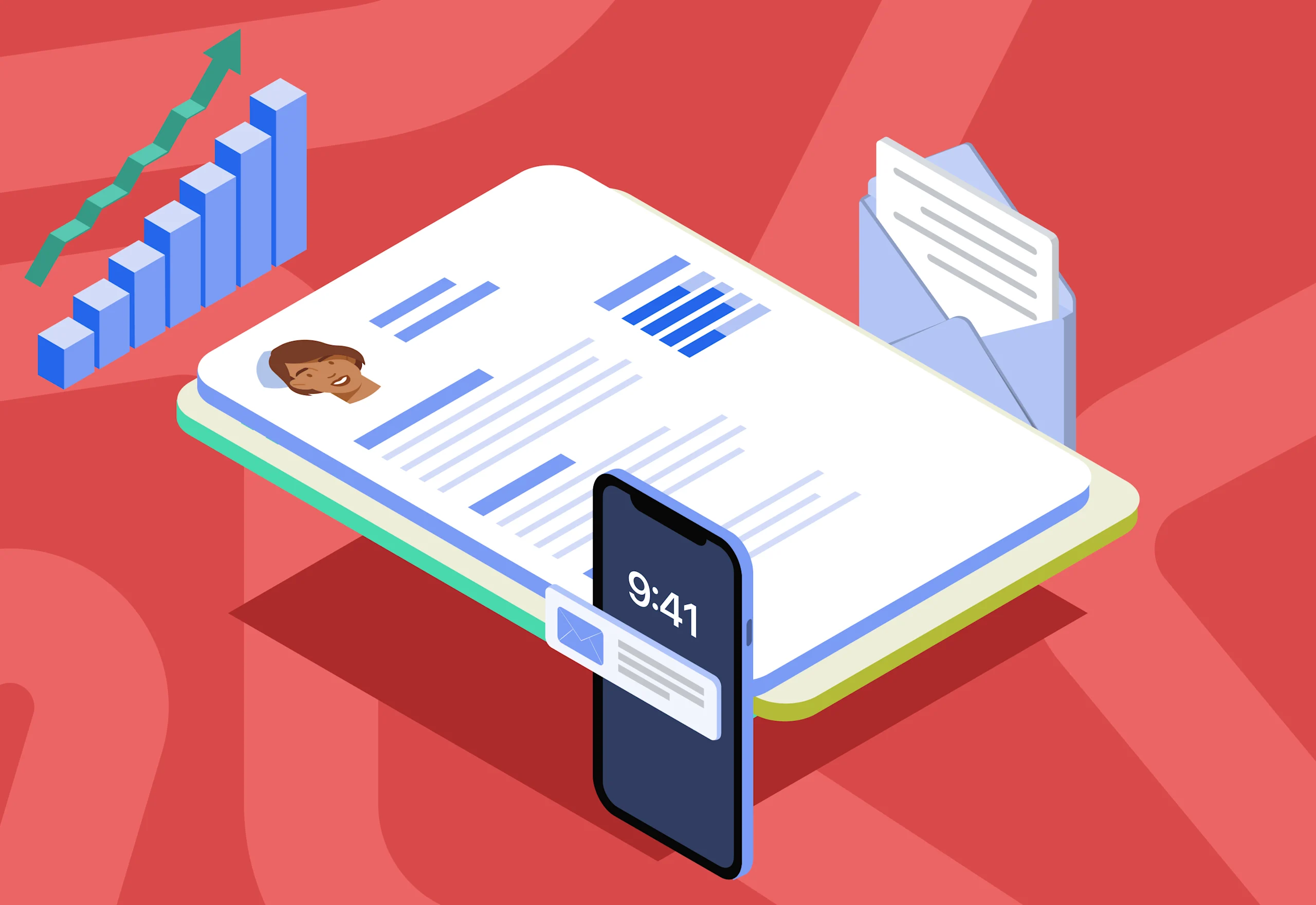
You should add your LinkedIn profile to the header of your resume, along with other contact information, like address, email address, and phone number. That’s the most natural place for it; recruiters can access it immediately and don’t have to search through the entire resume to find it.
Alternatively, you can include it in the footer of your resume, especially if you accompany it with a call to action. However, this is a less standard practice, so it may be safer to stick to the header.
How to Add a LinkedIn Profile to a Resume?
To add a LinkedIn profile to a resume, you can copy and paste the link from your profile, hyperlink it to make it clickable, add a LinkedIn logo, or include a scannable QR code. You can easily create one using an online QR code generator, making it simple for recruiters to access your LinkedIn profile with a quick scan.
Below, we will explain how to do each and provide LinkedIn on resume examples that showcase each method.
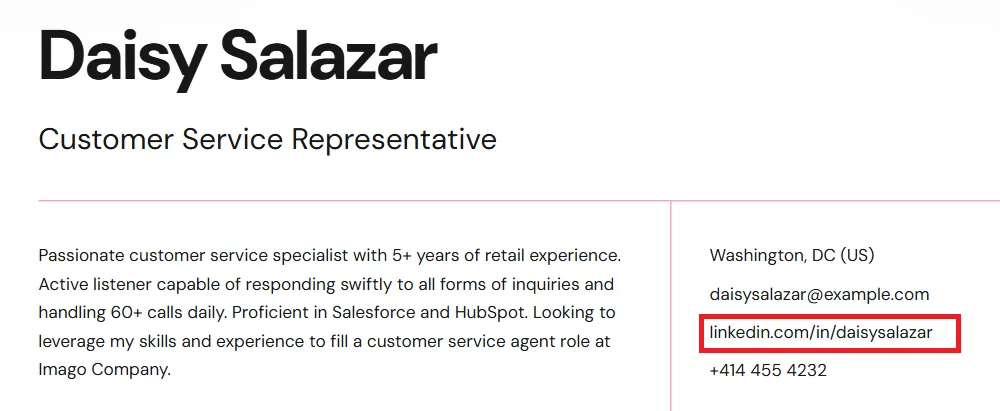
#1. Copying/Pasting the Link
The best tip on how to put LinkedIn on a resume is also the first that comes to mind—simply copy and paste the link to the document.
So, how to get a LinkedIn URL copied? Just load your profile and select the Edit public profile & URL option. Next, copy your public profile URL under the Edit your custom URL section.
Lastly, paste the link in the header or footer of your resume.
#2. Hyperlinking
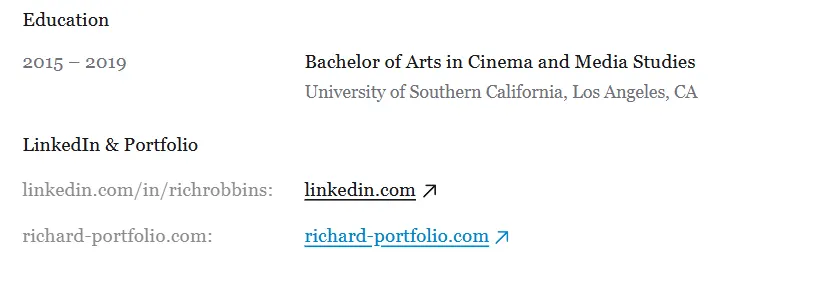
Another simple tip on how to put LinkedIn on a resume is to hyperlink it to make it clickable. That way, recruiters will have easy, one-click-away access to it.
Here’s how to do that:
Type or paste a clean version of your LinkedIn URL in your resume; for example, linkedin.com/in/yourname.
Highlight the text and right-click on it to open the drop-down menu, then choose the Hyperlink option.
In the URL field, paste your full URL, e.g., https://www.linkedin.com/in/yourname. This way, the display text stays clean while the full address powers the link behind it.
Click OK, and test the link to see if it’s functional.
Pro tip: Keep in mind that hyperlinks only work in digital documents. If you're printing your resume to hand out in person, the link won't be clickable. In this case, use the QR code method.
#3. Adding a LinkedIn Logo to the Resume
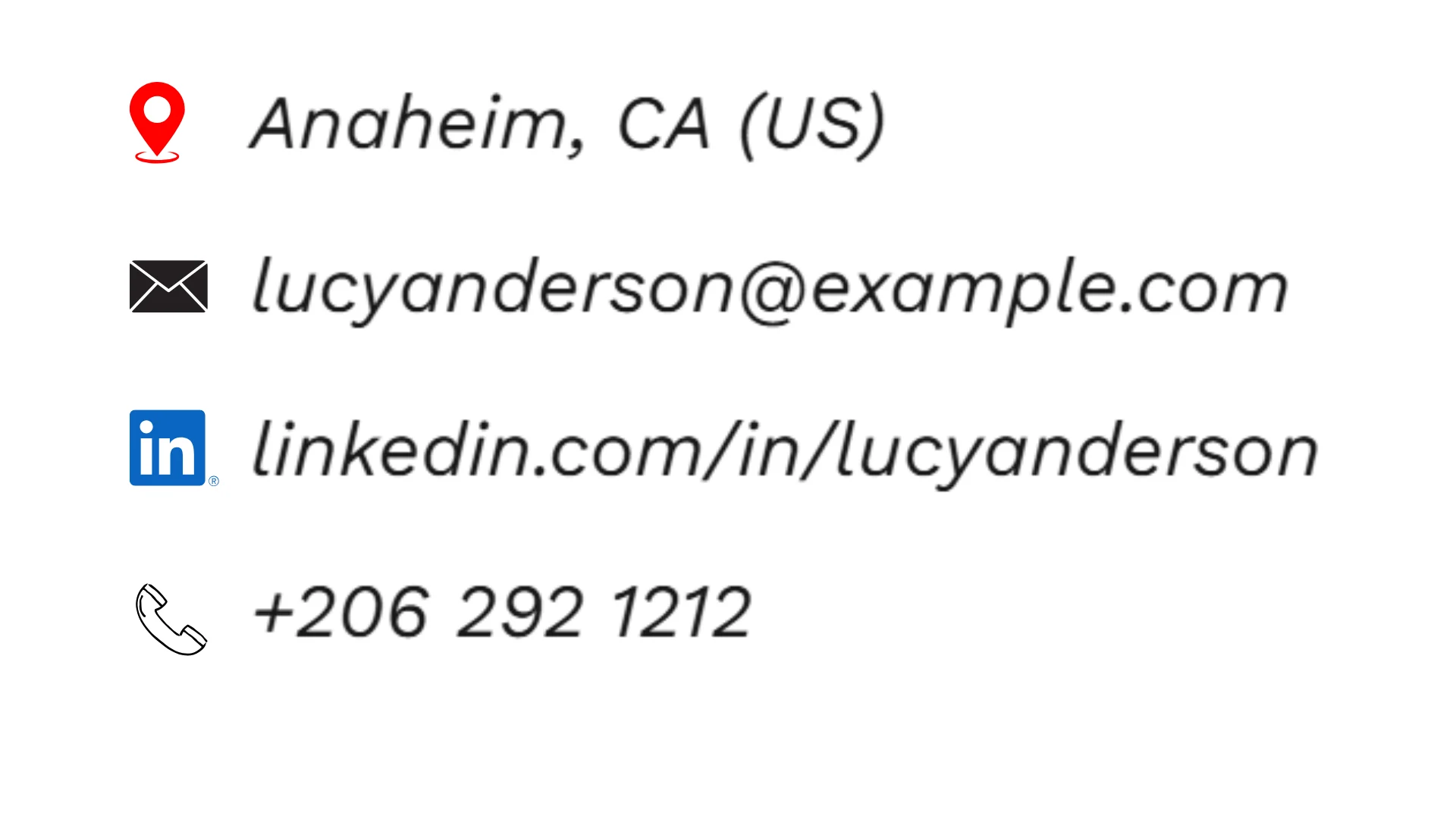
If you want your resume to appear even more professional, adding the LinkedIn logo to it can be a way to achieve that.
So, how to put the LinkedIn symbol on a resume?
First, download the LinkedIn symbol for your resume and decide where you want to place it. Then, locate the icon on your device and add it to your document. In the end, you can resize it for the final touches. Keep in mind that this works best if you submit your resume directly to a human reviewer because logos and images are often stripped or misread by ATS software.
#4. Adding a LinkedIn QR code
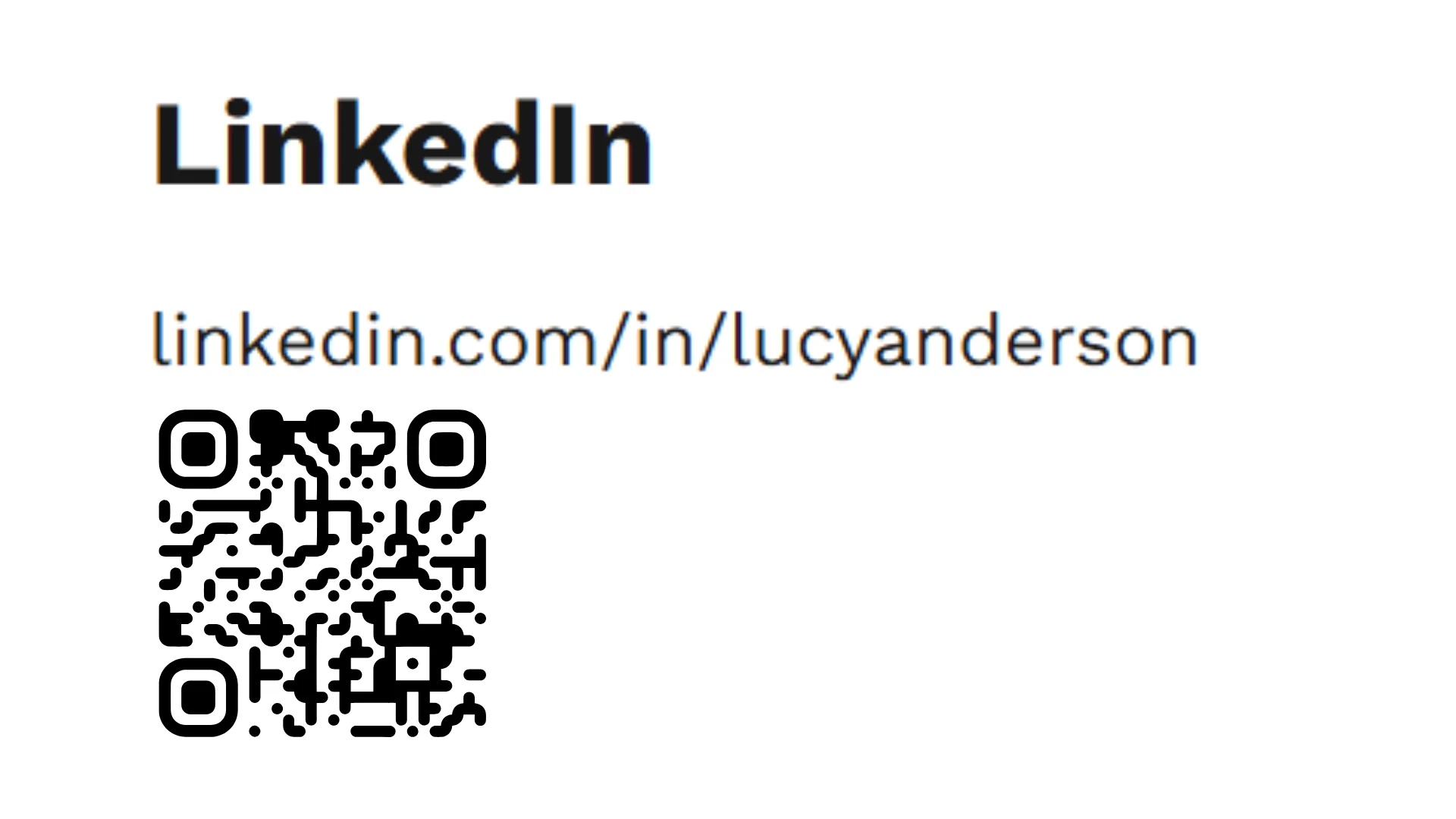
If you want to make it even easier for recruiters to locate you on LinkedIn, consider adding an LI QR code—the one that can be scanned with a smartphone camera or online QR code scanner—to your resume.
First, create a QR code online and choose the information to encode (the link to your LinkedIn profile). Then, copy your LinkedIn URL and post it to the generator. Lastly, choose where to place the code and add it as an image to your resume.
However, keep in mind that recruiters don’t typically want to take out their phones and scan your code if there’s an option to simply click the link. So, QR codes will add value if you’re handing out physical copies of your resume, where links obviously aren’t clickable. On digital copies, it’s always better to hyperlink your profile.
3 Benefits of Featuring Your LinkedIn Profile on a Resume
Here are some benefits of featuring your LinkedIn profile on a resume:
Your profile will give your application another layer because the platform offers much more room for you to go into detail about your experience and knowledge than a resume.
LinkedIn offers reputable social proof of your expertise to recruiters in the form of endorsements and testimonials from your connections.
Since 72% of recruiters search for candidates on LinkedIn, attaching your profile to your resume makes it easier for your potential employer to find you online and learn more about you.
4 Mistakes to Avoid When Putting LinkedIn on Your Resume
Here are some common mistakes to avoid when putting LinkedIn on your resume:
Long URLs. A default URL usually contains a string of numbers and letters that won’t look very professional on your resume. So, always make sure to edit your URL on your LinkedIn profile; make it short and easy to read, preferably using just your name.
Broken links. If your URL link is broken, recruiters won’t be able to access your LinkedIn profile, so it will essentially be useless. Always double-check whether your URL works after copying it to your resume, especially if you’ve edited it.
Unoptimized profile. A profile without a picture, work experience, skills, or other useful information won’t do much for a potential employer; if anything, it might leave a bad impression. Treat it as another part of your application and make sure it showcases who you are as a professional before sharing it.
Overdesign. A single QR code on your resume can make it look more professional, but adding more than that isn’t recommended. For example, if you want to link to both your LinkedIn and portfolio, don’t make them both QR codes; it won’t look good, and recruiters are unlikely to scan both.
When Not to Put LinkedIn on a Resume
You shouldn’t put LinkedIn on a resume in the following scenarios:
Outdated profile. If the information on your LinkedIn profile doesn’t match the details provided in your resume, don’t include it in your application. Only do so once you’ve updated it and made sure they complement each other.
Unprofessional activity. Check your posting and commenting history; if you feel that there’s anything inappropriate, it’s best not to include your profile. Your LinkedIn should impress employers, not alienate them.
Lack of content. If your LinkedIn profile has practically no content aside from your name and professional title, there’s no need to include it. It won’t add anything to your application and might be seen as unprofessional.
Should You Add a Resume to Your LinkedIn Profile?
While there’s an option to add your resume to your LinkedIn page, you should think twice about doing so if it contains sensitive information. Since your LinkedIn profile is accessible to everyone, your resume would be too. That means anyone can see and download it, which puts you at risk of a privacy breach.
However, if there’s no private information on your resume, you can upload it to LinkedIn quite easily. All you need to do is select the Add Profile Section on your profile and click on the Media option in the Features section. From there, locate your resume and upload it.
Final Thoughts
Having a presentable LinkedIn profile raises your chances of getting noticed and, subsequently, hired. However, attaching it to your resume can make those chances skyrocket, as it offers recruiters an in-depth insight into your skills, knowledge, and work experience. Of course, reputable references and endorsements add yet another layer to your application.
So, if you were wondering, “Should I put LinkedIn on a CV or resume,” we hope we’ve answered your question. By following our simple guidelines on how to put LinkedIn on a resume, you can present yourself as the ideal candidate for your dream job with minimal effort!
How to Put LinkedIn on Resume FAQs
#1. How do I get my LinkedIn URL?
You can get your LinkedIn URL by visiting your profile and selecting the web address from your browser’s address bar. Alternatively, go to your profile and click on Public profile & URL to select or personalize your URL.
#2. How do I shorten my LinkedIn URL?
Shorten your LinkedIn URL by visiting the Public profile & URL page, where you can click on Edit your custom URL in the right-hand sidebar. While shortening it, make sure it has between 3 and 100 characters, and don’t use spaces, symbols, or special characters.
#3. Is my LinkedIn URL the same as my profile link?
Your LinkedIn URL is the same as your profile link; copying it to your resume directs recruiters to your LinkedIn profile. It should essentially look like this: linkedin.com/in/yourname. In some cases, you’ll have additional numbers attached to your name, which you can edit by clicking the Edit your custom URL option.
#4. Should I upload my resume to LinkedIn?
Uploading your resume to your public LinkedIn profile isn't recommended if it contains private information. On the other hand, if your resume contains no sensitive information, uploading it is fine.
#5. Should I include my LinkedIn URL in my cover letter?
You should include your LinkedIn URL in your cover letter, although it’s not absolutely necessary. If you choose to do so, place it in the header with your contact information, right next to your phone number and email.
Related Articles
Bad Resume Examples & Mistakes